Turmeric and Curcumin: Ancient Wisdom Meets Modern Science
Exploring a botanical compound with thousands of years of traditional use and growing scientific interest.
Introduction to Turmeric
Turmeric, derived from the rhizome of Curcuma longa, has been a cornerstone of traditional wellness practices in South Asian cultures for over 4,000 years. The golden-yellow color that characterizes turmeric is primarily due to its active compound, curcumin, which comprises approximately 3-5% of the dried rhizome by weight.
In traditional Ayurvedic medicine, turmeric has been used to support general health and vitality. Modern scientific investigation has focused on understanding the chemical composition and biological mechanisms underlying these traditional applications.
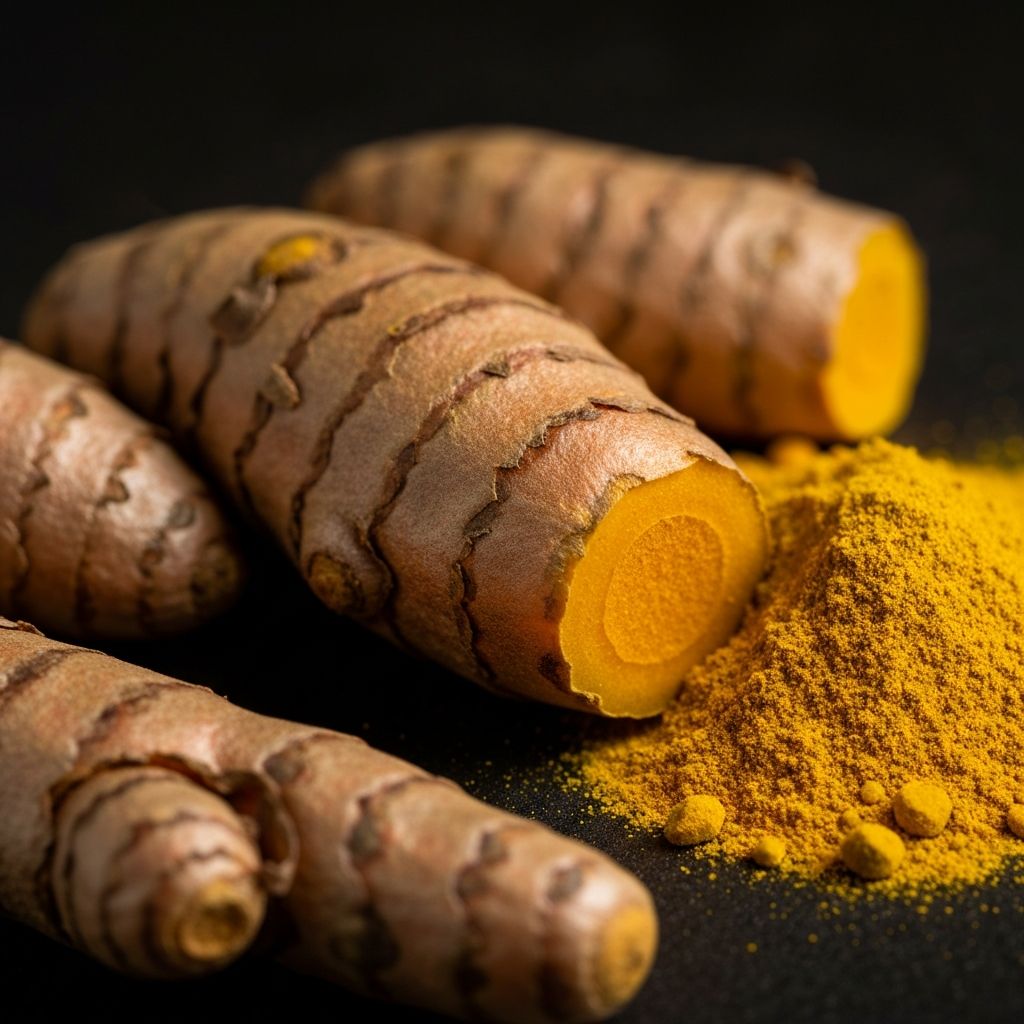
The turmeric rhizome contains curcumin and other bioactive compounds.
Chemical Composition and Active Components
Turmeric contains several bioactive compounds collectively known as curcuminoids. The primary components are:
Curcumin
The primary active compound, making up about 3-5% of turmeric. Curcumin is a polyphenol with distinct chemical properties and biological activity.
Demethoxycurcumin
A related curcuminoid present in turmeric that also demonstrates bioactivity and may contribute to turmeric's overall effects.
Bisdemethoxycurcumin
Another naturally occurring curcuminoid with its own distinct chemical properties and potential biological significance.
Bioavailability Challenges and Solutions
One of the major areas of scientific investigation regarding curcumin concerns its bioavailability—the extent to which the body can absorb and utilize it. Pure curcumin has relatively low bioavailability when consumed orally, as it is poorly absorbed by the gastrointestinal tract.
However, research has identified several strategies that may enhance curcumin absorption:
- Piperine Combination: Black pepper contains piperine, which may enhance curcumin absorption significantly
- Fat Solubility: Consuming turmeric with dietary fats improves absorption
- Heat Application: Heating may alter curcumin's structure to improve absorption
- Formulation Advances: Modern preparations using specialized delivery systems show promise
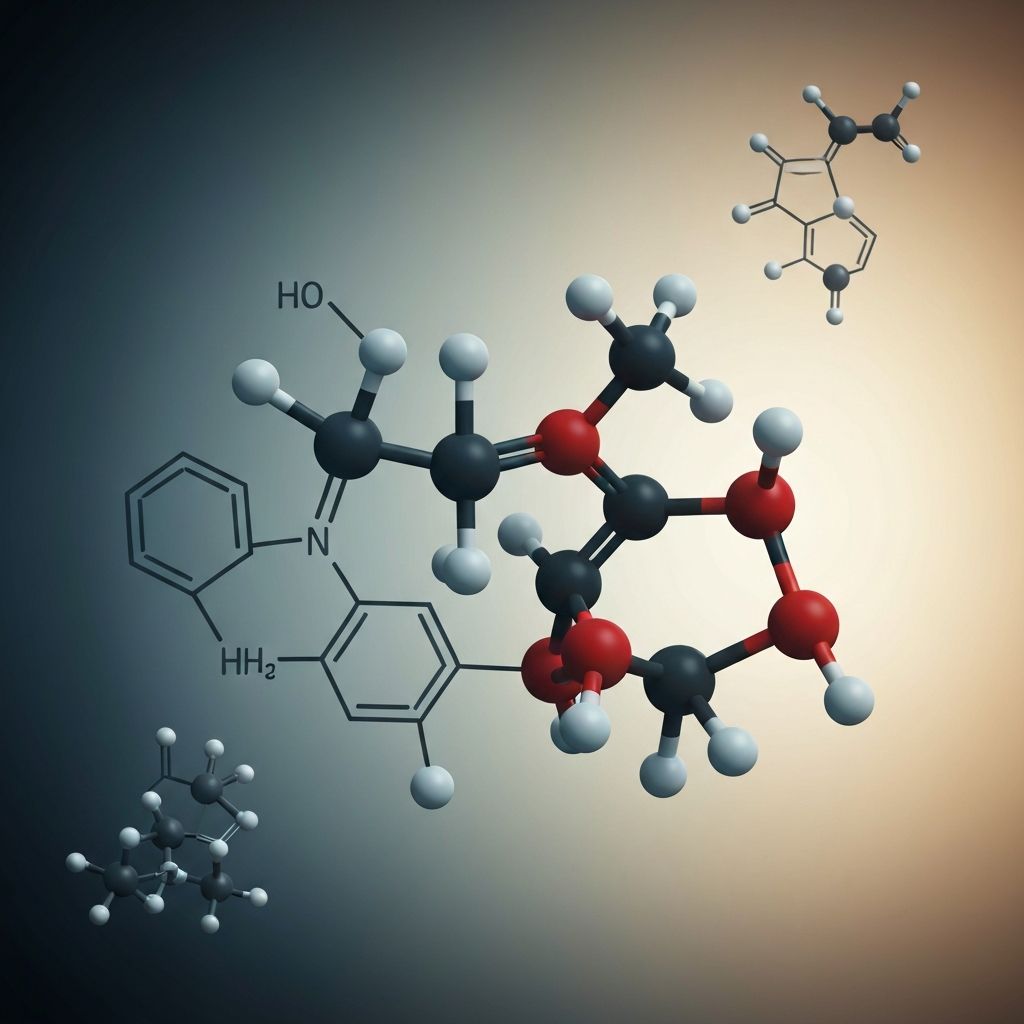
Understanding molecular mechanisms helps optimize botanical compound effectiveness.
Mechanisms of Action: How Curcumin May Work
Contemporary research has identified several potential pathways through which curcumin interacts with cellular processes:
Cellular Signaling Pathways
Curcumin interacts with various cellular signaling proteins and pathways that regulate cellular responses and gene expression, potentially supporting cellular health at the molecular level.
Antioxidant Properties
Curcumin demonstrates antioxidant characteristics in laboratory studies. This property is being investigated for its potential role in supporting cellular protection and maintaining cellular balance.
Protein Interaction
Research shows curcumin can interact with various proteins involved in cellular processes. These interactions may explain some of its observed biological activities in research studies.
Gene Expression Modulation
Studies suggest curcumin may influence gene expression through various mechanisms, potentially affecting how cells produce and regulate proteins and cellular responses.
Research Findings and Current Understanding
Scientific investigation into curcumin has grown exponentially in recent decades. Thousands of studies have examined its properties and potential biological effects. Key research areas include:
Cell-Level Studies
Laboratory research on cultured cells demonstrates that curcumin can interact with various cellular pathways. These studies provide foundational understanding but require further investigation in living organisms.
Animal Model Research
Studies in animal models have examined curcumin's effects on various physiological processes. Results from animal studies provide insights that inform human research but don't directly translate to human outcomes.
Human Clinical Trials
Clinical trials examining curcumin's effects in humans are ongoing. Results have been mixed, with some studies showing promising results while others show more modest effects. The quality, dosage, and formulation of curcumin used significantly impacts outcomes.
Bioavailability Enhancement
Much recent research focuses on improving curcumin's absorption and biological activity through various formulation and combination strategies, recognizing that traditional curcumin preparations may have limited bioavailability.
Traditional Uses and Modern Applications
Traditional Ayurvedic Applications
In Ayurvedic medicine, turmeric has been recommended for supporting general health, promoting digestion, and maintaining physical comfort. It was often used in combination with other herbs and prepared through various methods including cooking and grinding into powders.
Traditional preparations often combined turmeric with black pepper and dietary fats, practices that modern research suggests may indeed enhance curcumin's bioavailability.
Contemporary Wellness Applications
Today, turmeric and curcumin are used in various forms including:
- Fresh or dried turmeric powder in cooking
- Turmeric supplements and capsules
- Specialized curcumin formulations with enhanced bioavailability
- Turmeric-based beverages like golden milk
- Combination formulas with complementary botanicals
Considerations and Future Research
While turmeric and curcumin show promise in research settings, several important considerations remain:
- Bioavailability remains a significant challenge for oral curcumin administration
- Individual responses to curcumin may vary considerably
- Long-term effects and optimal dosages require further investigation
- Quality and standardization of commercial products varies considerably
- Interaction with medications and other supplements requires careful consideration
As research continues to evolve, our understanding of turmeric and curcumin becomes increasingly sophisticated, revealing both the promise and the complexity of botanical science.
Disclaimer: This article is provided for educational purposes. It is not medical advice. Consult with a healthcare professional before using turmeric or curcumin supplements, especially if you have existing health conditions or take medications.