Boswellia and Frankincense: Historical Use and Research
Tracing an ancient remedy from ceremonial use to modern scientific investigation.
Ancient History of Frankincense
Frankincense, derived from the resin of Boswellia trees, has been one of the most valued substances in human history. Archaeological evidence and historical records document its use dating back over 3,000 years.
The word "frankincense" comes from the Old French "franc encens" meaning "high quality incense." For centuries, frankincense was considered as valuable as gold, traded along ancient trade routes and used in religious ceremonies, aromatherapy, and traditional medical practices.
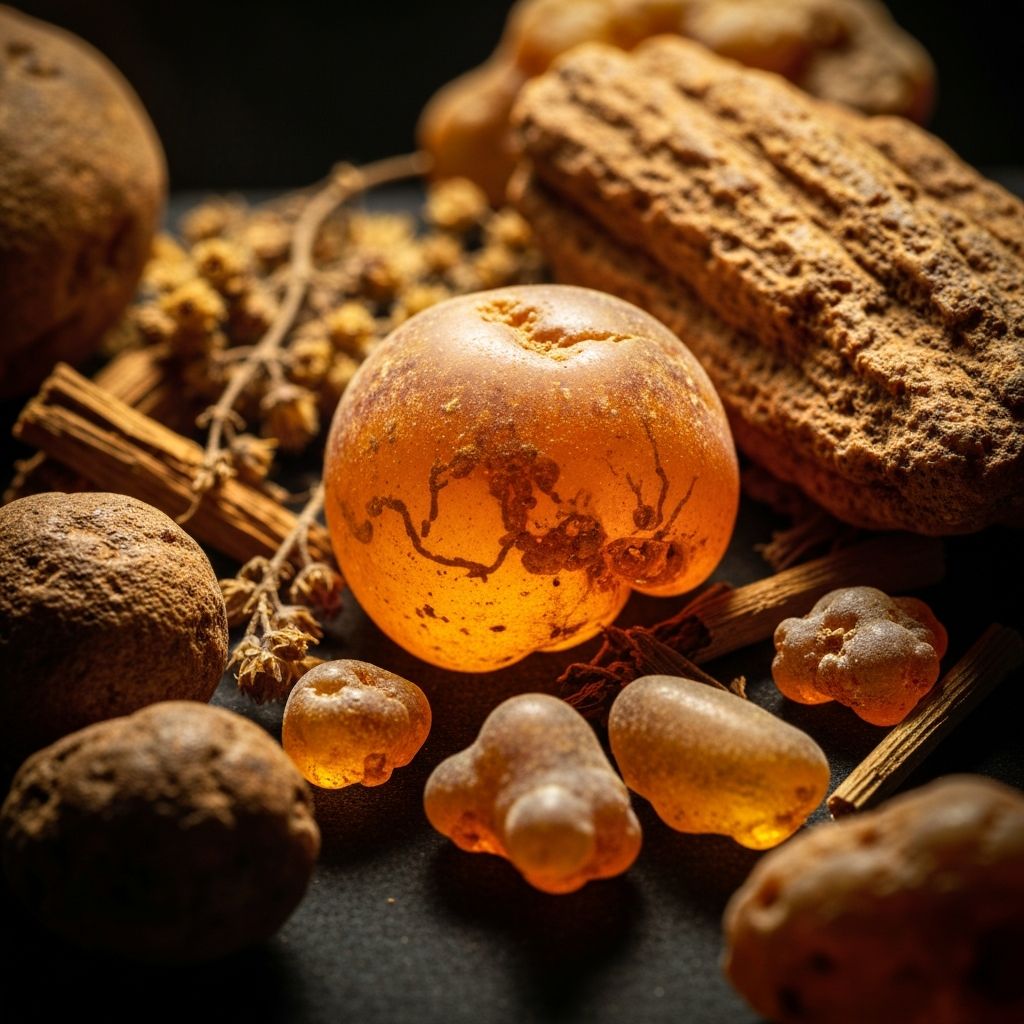
Frankincense resin has been treasured for millennia across multiple cultures.
Traditional Applications Across Cultures
Egyptian Medicine
Ancient Egyptians used frankincense in embalming processes and in traditional medical preparations. It held significant spiritual and medicinal importance in Egyptian civilization.
Ayurvedic Practice
In traditional Indian medicine, Boswellia has been used for thousands of years to support joint health, flexibility, and general wellness as part of comprehensive herbal formulations.
Traditional Chinese Medicine
Frankincense, known as "ru xiang" in Chinese herbal medicine, has been used to support circulation and comfort. It remains an important component of traditional herbal preparations.
Chemical Composition of Boswellia
Modern chemical analysis has identified numerous bioactive compounds in Boswellia resin. The most researched components are the boswellic acids, which comprise approximately 30-65% of the resin extract.
Primary Boswellic Acids
- AKBA (Acetyl-11-keto-β-boswellic acid): Considered the most bioactive form
- KBA (11-keto-β-boswellic acid): Another significant active compound
- β-Boswellic acid: A key structural component
- Incensole and related compounds: Other potentially bioactive molecules
Secondary Components
Beyond boswellic acids, Boswellia also contains:
- Essential oils contributing to aromatic properties
- Polysaccharides that may support immune function
- Terpenes with various biological activities
- Additional resinous components with potential bioactivity
Scientific Research on Boswellia
Cellular Mechanisms
Laboratory research has identified several mechanisms through which boswellic acids interact with cellular processes:
- Interaction with signaling pathways related to cellular responses
- Effects on specific enzyme systems
- Modulation of cellular adhesion molecules
- Potential effects on gene expression patterns
Clinical Trial Evidence
Numerous clinical trials have examined Boswellia extracts in humans, with particular focus on joint health and mobility. Studies have employed various Boswellia preparations with different standardization levels of boswellic acids.
Bioavailability and Absorption
Like many botanical compounds, boswellic acids face bioavailability challenges. Research indicates that the absorption of boswellic acids is variable and influenced by several factors:
- The specific boswellic acid fraction affects absorption
- Standardized extracts show improved bioavailability over crude preparations
- Combination with other compounds may enhance absorption
- Individual gut microbiota influences metabolism and effectiveness
- AKBA has been identified as the most bioavailable form in some studies
Contemporary Research Directions
Standardized Extracts
Modern research focuses on standardized Boswellia extracts with defined levels of boswellic acids, particularly AKBA, to ensure consistency and reproducibility of effects.
Combination Studies
Many contemporary studies examine Boswellia in combination with other botanicals, investigating potential synergistic effects and enhanced bioavailability.
Molecular Pathways
Advanced research continues to elucidate the specific molecular mechanisms through which boswellic acids interact with cellular systems and processes.
Future Perspectives
As research on Boswellia continues to evolve, several promising directions emerge. Enhanced formulations using specialized delivery systems may improve bioavailability and effectiveness. Understanding the individual variations in response to Boswellia preparations could enable more personalized approaches to supplementation.
The ancient wisdom surrounding Boswellia, combined with modern scientific investigation, provides a compelling example of how traditional botanical knowledge and contemporary research can work together to deepen our understanding of plant-based compounds and their potential role in supporting human health.
Disclaimer: This article is provided for educational purposes and does not replace professional medical advice. Consult a healthcare provider before using Boswellia supplements.